Scotch Gambit 4...Nf6 5.e5
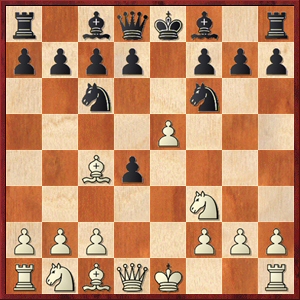
The Scotch Gambit line with 4...Nf6 reaches a position often arrived at via the Two Knights Defence: 1.e4 e5 2.Nf3 Nc6 3.Bc4 Nf6 4.d4 exd4. It can also arise from the Urusov Gambit: 1.e4 e5 2.Bc4 Nf6 3.d4 exd4 4.Nf3 Nc6.
5.Ng5 is not particularly reliable after 4...Nf6, because of the response 5...d5 6.exd5 Qe7+, whereupon White must play 7.Kf1 in order to avoid losing a pawn for nothing, but then Black gets very good compensation for a pawn (which is hard for White to hold onto).
With 5.e5, White attacks the f6-knight, encouraging the knight to move to a sub-optimal square. The traditional main line is 5...d5, counterattacking against the bishop on c4, which typically leads to a relatively positional game although both sides have some scope to attack the enemy king. Following 6.Bb5 (6.exf6?! dxc4 doesn't work for White because White hasn't castled yet and the white king is vulnerable to attack down the e-file) 6...Ne4 7.Nxd4, Black chooses between the solid, if rather passive, 7...Bd7, and the more aggressive 7...Bc5. Black has some gambit possibilities after 7...Bc5, though if White avoids being too materialistic and continues with 8.Be3, the sacrifice of a pawn with 8...0-0 doesn't provide enough compensation and so play normally continues 8...Bd7 9.Bxc6 bxc6 10.Nd2 Qh4 11.0-0 Bb6. Black has the bishop-pair and the more active pieces, but White can play against the doubled black queenside pawns and strive to build up a kingside attack, often by pushing the f-pawn.
However, since White has not yet castled, 5...Ne4 and 5...Ng4 are both playable as well. 5...Ne4 leads to fairly unbalanced play in which White has gambit possibilities, such as 6.Bd5 Nc5 7.c3!?, while 6.Qe2 and 6.0-0 are the main alternatives (the most popular line runs 6.0-0 d5 7.exd6 Nxd6 8.Bd5).
5...Ng4 may well be the hardest line for White to crack, and it has been played by grandmasters Magnus Carlsen and Nigel Short. White can head for a queenless middlegame with 6.Qe2, whereupon play usually continues 6...Qe7 7.Bf4 f6, leading to equal play. The main alternative is 6.0-0, which can lead to interesting gambit play following 6...d6 7.exd6 Bxd6 8.Re1+ Kf8, but Black can also consider 6...Be7!? with the aggressive idea of 7.Bf4 g5.
5.Ng5 is not particularly reliable after 4...Nf6, because of the response 5...d5 6.exd5 Qe7+, whereupon White must play 7.Kf1 in order to avoid losing a pawn for nothing, but then Black gets very good compensation for a pawn (which is hard for White to hold onto).
With 5.e5, White attacks the f6-knight, encouraging the knight to move to a sub-optimal square. The traditional main line is 5...d5, counterattacking against the bishop on c4, which typically leads to a relatively positional game although both sides have some scope to attack the enemy king. Following 6.Bb5 (6.exf6?! dxc4 doesn't work for White because White hasn't castled yet and the white king is vulnerable to attack down the e-file) 6...Ne4 7.Nxd4, Black chooses between the solid, if rather passive, 7...Bd7, and the more aggressive 7...Bc5. Black has some gambit possibilities after 7...Bc5, though if White avoids being too materialistic and continues with 8.Be3, the sacrifice of a pawn with 8...0-0 doesn't provide enough compensation and so play normally continues 8...Bd7 9.Bxc6 bxc6 10.Nd2 Qh4 11.0-0 Bb6. Black has the bishop-pair and the more active pieces, but White can play against the doubled black queenside pawns and strive to build up a kingside attack, often by pushing the f-pawn.
However, since White has not yet castled, 5...Ne4 and 5...Ng4 are both playable as well. 5...Ne4 leads to fairly unbalanced play in which White has gambit possibilities, such as 6.Bd5 Nc5 7.c3!?, while 6.Qe2 and 6.0-0 are the main alternatives (the most popular line runs 6.0-0 d5 7.exd6 Nxd6 8.Bd5).
5...Ng4 may well be the hardest line for White to crack, and it has been played by grandmasters Magnus Carlsen and Nigel Short. White can head for a queenless middlegame with 6.Qe2, whereupon play usually continues 6...Qe7 7.Bf4 f6, leading to equal play. The main alternative is 6.0-0, which can lead to interesting gambit play following 6...d6 7.exd6 Bxd6 8.Re1+ Kf8, but Black can also consider 6...Be7!? with the aggressive idea of 7.Bf4 g5.
Games and analysis
The coverage is divided as follows:
1. 5.e5 (with a brief note on 5.Ng5) 5...d5 6.Bb5 Ne4 7.Nxd4 Bd7
2. 5.e5 d5 6.Bb5 Ne4 7.Nxd4 Bc5
3. 5.e5 Ne4 6.Bd5
4. 5.e5 Ne4 6.Qe2
5. 5.e5 Ne4 6.0-0
6. 5.e5 Ng4 6.0-0
7. 5.e5 Ng4 6.Qe2
1. 5.e5 (with a brief note on 5.Ng5) 5...d5 6.Bb5 Ne4 7.Nxd4 Bd7
2. 5.e5 d5 6.Bb5 Ne4 7.Nxd4 Bc5
3. 5.e5 Ne4 6.Bd5
4. 5.e5 Ne4 6.Qe2
5. 5.e5 Ne4 6.0-0
6. 5.e5 Ng4 6.0-0
7. 5.e5 Ng4 6.Qe2
[Event "Commonwealth-ch RSA op"]
[Site "Gauteng"]
[Date "2011.07.03"]
[Round "11"]
[White "Jones, Gawain C"]
[Black "Gupta, Abhijeet"]
[Result "1-0"]
[ECO "C56"]
[WhiteElo "2596"]
[BlackElo "2604"]
[PlyCount "73"]
[EventDate "2011.06.25"]
[EventRounds "11"]
[EventCountry "RSA"]
[Source "ChessBase"]
[SourceDate "2011.08.29"]
1. e4 e5 2. Nf3 Nc6 3. d4 exd4 4. Bc4 Nf6 {This sensible response transposes
to the Two Knights Defence.} 5. e5 {White pushes the e-pawn and attacks
Black's f6-knight, attempting to drive it to a potentially unstable square.} ({
The less reliable Perreux Variation,} 5. Ng5 {, is covered extensively at
Michael Goeller's Urusov Gambit site. The main problem with it is the line} d5
6. exd5 Qe7+ 7. Kf1 (7. Qe2 $6 Nb4 {wins a pawn on either d5 or c2.}) 7... Ne5
8. Qxd4 Nxc4 9. Qxc4 h6 10. Nf3 (10. Nc3 $6 {is an interesting, but unsound,
piece sacrifice:} hxg5 11. Bxg5 Qc5 12. Re1+ Kd8) 10... Qc5 $1 {Normally it is
a bad idea to trade queens when a pawn down,k but Black is able to generate a
long enough lead in development to ensure that White cannot hold onto the
extra pawn without making major concessions.} 11. Qxc5 (11. Qe2+ Be7 {and I
don't think White can keep the extra pawn, as d5 and c2 are very weak.}) 11...
Bxc5 12. Nc3 Bf5) 5... d5 {[%eval -32767,0] This is Black's most popular
counter, but as subsequent games show, 5...Ne4 and 5...Ng4 are also fully
playable and may well offer Black better chances than the main line.} 6. Bb5 {
White moves the bishop out of the way of the attack and pins the c6-knight,
threatening to exchange it off and shatter Black's queenside pawn structure,
albeit at the cost of the bishop-pair.} (6. exf6 $6 dxc4 {leads to trouble for
White, because of the fact that White has not yet castled and Black is
threatening to take on f6.} 7. O-O (7. fxg7 Qe7+) (7. Qe2+ Be6 8. O-O d3) 7...
Qxf6 8. Re1+ Be6) (6. O-O $6 {is refuted by} dxc4 7. exf6 Qxf6) 6... Ne4 (6...
Nd7 {counterattacking against e5 has been tried unsuccessfully by Ivan Sokolov,
and is rather passive.} 7. O-O (7. Nxd4 $6 Ndxe5) 7... Be7 8. Re1 O-O 9. Bxc6
bxc6 10. Nxd4 {led to some advantage for White in L.Vajda-I.Sokolov, European
Championship 2011.}) (6... Qe7 $6 {leads nowhere for Black after} 7. O-O) 7.
Nxd4 (7. O-O {is an attempt to offer a gambit but it is not convincing.} Bg4 (
7... Bc5 8. c3 (8. Nxd4 {is probably best, transposing to 7.Nxd4 Bc5 8.0-0})
8... dxc3 9. Nxc3 Nxc3 10. bxc3 O-O {and White has some compensation for the
pawn, but probably not enough, as Black's development is quite free-flowing.})
8. Nbd2 (8. Qxd4 Bc5 9. Qd3 O-O {is slightly better for Black.}) (8. c3 dxc3 9.
Nxc3 Nxc3 10. bxc3 Qd7 {gives White some compensation for a pawn, but it is
not clear if it is enough, I. Mackintosh-S.Graham, email 2007.}) 8... Bc5 9.
Nb3 Bb6 10. Nbxd4 {leads to approximate equality.}) 7... Bd7 {This move is
solid and isn't too bad, but gives White good chances to work up attacking
chances by pushing the f-pawn.} (7... Bc5 {, as features in the next game,
gives Black more active prospects.}) 8. Bxc6 bxc6 9. O-O Bc5 10. Be3 (10. f3
Ng5 11. f4 {is the main alternative, aiming to get the e and f-pawns rolling
immediately. This move-order is probably more accurate than the game
continuation as it is far from clear that inserting Re1 and ...Qe7 benefits
White.} Ne6 (11... Ne4 12. Be3 Bb6 ({or} 12... O-O 13. Nd2) 13. Nd2 {gave
White a slight edge due to the long-term attacking chances on the kingside and
better pawn structure, E. Sveshnikov-D.Zoler, Cerniak Memorial 2011.}) 12. Be3
(12. c3 f5) 12... O-O 13. c3 f5 {This move is desirable to block White's f4-f5
thrust.} (13... Bb6 14. f5 Nc5 15. f6) 14. Nd2 {may give White a slight edge
due to the better pawn structure although White's kingside play has been
slowed down by Black's ... f7-f5.}) 10... Qe7 (10... Qb8 {counterattacks
against b2, but} 11. Nc3 Nxc3 (11... Qxb2 $2 12. Nxe4 dxe4 13. e6) 12. bxc3 Bb6
13. a4 {gave White promising play on both wings in N.Short-A. Gupta,
Commonwealth Championship 2011.}) 11. Re1 {This discourages Black from taking
the e5-pawn because of the threat of uncovering some nasty pins from the
e1-rook down the e-file. However, the rook on e1 rather than f1 potentially
reduces the impetus of White's upcoming f-pawn push.} O-O (11... Qxe5 $6 12. f3
{threatens to pin the queen to the king if the knight moves, or alternatively
to win the knight for a pawn.}) 12. f3 Ng5 13. f4 Ne6 {White has got in f3 and
f4, but the moves Re1 and ...Qe7 have been inserted.} 14. c3 Bb6 (14... Rab8 {
is a good active move.}) (14... f6 {challenging White's e5-pawn is a good
alternative.} 15. f5 Nxd4 16. cxd4 Bb4 17. e6 Bxe1 18. Qxe1 {was then an
interesting exchange sacrifice in G.Sax-J.Smejkal, Verbas 1977.}) 15. a4 a5 (
15... Rab8 {again makes sense.} 16. a5 Bxd4 17. cxd4 c5) 16. Kh1 g6 (16... Rab8
) 17. Nd2 Rab8 18. N2f3 Ng7 (18... Bxd4 19. cxd4 Rxb2 {is again met by the
strong} 20. f5 $1) 19. f5 {A powerful pawn sacrifice, which helps White to
blast through to Black's king and is underestimated by computer engines.} Nxf5
20. Bg5 Qc5 21. Nxf5 Bxf5 22. Nd4 Be4 23. Bf6 {Threatening Qd2 and Qh6, with
mate to follow on g7.} Rfe8 {This prepares to meet Qd2-h6 with ...Qf8, so
White needs to reinforce the attack with other ideas.} 24. Qd2 Rb7 25. Qf4 Qf8
{White has outplayed Black and built up a strong attack, and now finishes off
with a powerful exchange sacrifice.} 26. Rxe4 $1 dxe4 27. Nf5 $1 h5 (27... gxf5
$2 28. Qg5+ Qg7 29. Qxg7#) 28. Bg7 {This unusual fianchetto of the bishop on
g7 prompts Black into giving up the queen in order to prevent a quick
checkmate.} Qxg7 29. Nxg7 Kxg7 30. Qf6+ Kg8 31. Rf1 Rf8 32. e6 Bc5 33. exf7+
Kh7 34. Qxc6 e3 35. Qxb7 e2 36. Re1 Rxf7 37. Qb5 1-0
[Event "Gibraltar"]
[Site "Gibraltar ENG"]
[Date "2008.01.29"]
[Round "8"]
[White "Nakamura, Hikaru"]
[Black "Hebden, Mark"]
[Result "1-0"]
[ECO "C45"]
[WhiteElo "2670"]
[BlackElo "2530"]
[PlyCount "97"]
[EventDate "2008.01.22"]
1. e4 e5 2. Nf3 Nc6 3. d4 exd4 4. Bc4 Nf6 5. e5 d5 6. Bb5 Ne4 7. Nxd4 Bc5 8.
Be3 (8. Nxc6 {is tempting, but allows Black to develop an attack which is
worth at least a draw.} Bxf2+ (8... Qh4 9. Nd4+ c6 10. Be3 cxb5 11. Nf3 $14) 9.
Kf1 (9. Ke2 $6 {should not be sufficient for White, e.g.} Bg4+ 10. Kf1 Qh4 ({Or
} 10... Qd7 $5 11. e6 fxe6 12. Qxg4 O-O) 11. Qxd5 Bb6 {- Mark Nieuweboer}) 9...
Qh4 {This move should lead to a draw by repetition if White finds a couple of
accurate moves.} (9... bxc6 $5 10. Bxc6+ Kf8 $44 {is a promising winning try
for Black suggested by Kevin Denny at the Chesspublishing.com forum, e.g.} 11.
Qd3 Bf5 12. Bxa8 Qxa8 13. Qb3 Bb6 {is one likely continuation, where Black has
very promising compensation for the exchange due to the better development and
White's misplaced king.}) 10. Nxa7+ c6 11. Nxc8 Rxc8 12. Be2 Bd4 13. Qe1 Bf2
14. Qd1 $11) (8. O-O {has been favoured by Ian Rogers but Black can get good
play with the line} O-O 9. Bxc6 (9. Nxc6 bxc6 10. Bxc6 Ba6 11. Qxd5 Bxf1 12.
Qxe4 Bb5 $44) 9... bxc6 10. Be3 (10. Nxc6 Qd7 11. Nd4 Ba6 $44) 10... Qe8 {
pressuring e5.}) 8... Bd7 (8... O-O 9. Nxc6 bxc6 10. Bxc5 Nxc5 11. Bxc6 {is a
less sound version of the 8.0-0 0-0 sacrifice for Black, because White has
been able to exchange off Black's important c5-bishop. For example,} Rb8 12.
Qxd5 Qe7 13. O-O $14 {Ye Jiangchuan-P.Svidler, China-Russia 2001.}) 9. Bxc6
bxc6 10. Nd2 Qh4 (10... Nxd2 11. Qxd2 {rather plays into White's hands.} O-O
12. O-O Bb6 (12... Qe7 13. Rae1 {was suggested to me by Mark Nieuweboer- White
has reasonable attacking chances on the kingside with ideas of Bg5 and/or
Re3-g3.}) 13. Bg5 Qe8 14. Rae1) 11. O-O {White's idea is to push the f-pawn,
similar to the lines following 7...Bd7.} (11. Nxe4 Qxe4 12. O-O Bb6 {is quite
pleasant for Black, who has the bishop-pair and ideas of ... c5.}) 11... Bb6 (
11... O-O {can also be met by 12.f3 or 12.f4 with similar play, but Black has
the additional option of blocking with ...f7-f5. For example,} 12. f4 f5 13.
Nxe4 fxe4 14. c4 {C.Zill-M.Tritt, email 2008.}) 12. N2b3 {White opts to
reinforce d4 rather than pushing the f-pawn immediately.} (12. f3 {is an
interesting alternative, e.g.} Ng5 13. f4 Bg4 14. Qc1 Ne6 15. N2b3 {with a
sharp and messy position.}) (12. f4 {is also playable, e.g.} Bg4 13. Qc1 c5 14.
N4b3 c4 15. Nxe4 cxb3 16. Nc5 {led to roughly equal chances in N.Opryatkin-T.
Schwetlick, email 2009.}) 12... Qe7 13. Re1 {Black attacks e5 and White
discourages Black from taking on e5 by opposing with the e1-rook, although
with the rook on e1 rather than f1, this takes the impetus out of the
impending f-pawn push.} O-O ({The pawn grab} 13... Qxe5 $6 {was tried in the
game J.Magem Badals-J.Hector, Spanish Ch 1990, but it didn't work out for
Black following} 14. f3 c5 15. Ne2 Nf6 16. Bxc5 $16) 14. f3 {White gets the
pawn push underway.} Nc5 (14... c5 {is quite a good alternative, creating
complications in the centre.} 15. fxe4 cxd4 16. Bxd4 c5 17. Nxc5 $5 (17. Bf2 d4
) 17... Bxc5 18. exd5 Rfc8 19. c3 {was then tried in I.Nowak-H.Daurelle, RM
2010, with a complex middlegame in which White has three pawns for a piece.}) (
{Black can also try} 14... Ng5 {after which Nakamura assessed the position as
unclear following} 15. Qd2 h6) 15. Nxc5 Bxc5 16. Nb3 Bb6 17. Qd2 Rae8 18. a4 {
Threatening to harass the b6-bishop with a4-a5.} f6 19. e6 (19. a5 {would have
been stronger.} Bxe3+ 20. Qxe3 {with the threat of taking on a7 gives White
the advantage.} a6 (20... Qb4 $6 21. Qxa7 Bf5 {as played in the game runs into}
22. Qd4) 21. Nc5 {is very strong for White.}) 19... Bxe6 20. a5 Bxe3+ 21. Qxe3
Qb4 22. Qxa7 Bf5 {Now the double attack on the e1-rook means that White does
not have time to play Qd4, although White is still slightly better in this
position.} 23. Rec1 Bxc2 24. Nd4 (24. Qc5 Qxb3 25. Rxc2 {was also playable.})
24... Bd3 (24... Ba4 {defending c6 was probably stronger, after which the
position is approximately equal.}) 25. Nxc6 Qxb2 26. Qd4 Qxd4+ 27. Nxd4 {The
ending is quite good for White, in spite of the pawn minus, because of the
powerful passed a-pawn which encourages Black to sacrifice rook for knight.
However, Black's passed c and d-pawns offer long-term potential.} Bc4 28. a6 c5
({Black does best to give up the exchange here, for the alternatives are grim,
e.g.} 28... Ra8 29. a7 Kf7 30. Rcb1 $16) 29. Nc6 Re6 30. a7 Rxc6 31. a8=Q Rxa8
32. Rxa8+ Kf7 33. Ra7+ Kg6 (33... Ke6 {was recommended by Nakamura, allowing
g7 and possibly h7 to drop off in return for allowing the black king into the
centre to support the advance of the c and d-pawns. I don't think Black has
enough for the exchange after, say,} 34. Rxg7 Ke5 35. Rxh7 Bd3 36. Rh5+ Kd4 {
but the c and d-pawns are certainly a problem for White here.}) 34. Re1 {Now
Black has two pawns for the exchange, but the black king is cut off from
supporting the advance of the c and d-pawns and it is difficult to defend both
of them against White's active rooks.} Bd3 35. Rd7 d4 36. Rc1 Ra6 37. h4 Bf5
38. Rd5 Be6 39. Rdxc5 d3 {This results in the quick loss of the d-pawn, after
which White is an exchange up for nothing.} (39... Bb3 {makes it harder for
White to win the d-pawn, although White is certainly better in this position.})
40. R5c3 Kh5 (40... Bf5 41. g4) 41. g3 Ra2 42. Rxd3 Bh3 43. Rc7 Kh6 44. g4 Rg2+
45. Kh1 Rf2 46. Rdd7 Bf1 47. Rxg7 Bd3 48. Rgd7 Rxf3 49. Kg2 1-0
[Event "Vejle"]
[Site "Vejle"]
[Date "1994.??.??"]
[Round "?"]
[White "Hector, Jonny"]
[Black "Nunn, John DM"]
[Result "1/2-1/2"]
[ECO "C56"]
[WhiteElo "2515"]
[BlackElo "2605"]
[PlyCount "122"]
[EventDate "1994.02.??"]
[EventRounds "9"]
[EventCountry "DEN"]
[EventCategory "10"]
[Source "ChessBase"]
[SourceDate "1994.06.01"]
1. e4 e5 2. Nf3 Nc6 3. Bc4 Nf6 4. d4 exd4 5. e5 Ne4 {For many years, 5...d5
was regarded as Black's only good option, but 5...Ne4 is also reliable and, as
we will see in the last couple of games, there is also a strong case for 5...
Ng4.} 6. Bd5 {This is probably White's best way to go if White wishes to play
a gambit. White covers the d5-square with the bishop and attacks the knight on
e4.} (6. c3 $6 d5 {leaves White unable to avoid the loss of a pawn under
unfavourable circumstances.} 7. exd6 Nxd6 {forces White to move the c4-bishop,
and then Black takes on c3.}) 6... Nc5 (6... Bb4+ {is playable but very risky.}
7. c3 (7. Kf1 f5 8. Nbd2 {as per D.Coleman-K.Kennaugh, 4NCL 2004, should have
been met by} Bxd2 9. Nxd2 Nc5 {with a murky position offering equal chances.})
7... dxc3 8. O-O cxb2 9. Bxb2 {is a dangerous two-pawn gambit, reminiscent of
the Danish and Göring Gambits.}) 7. c3 {White offers a gambit immediately.} (7.
O-O {is the main alternative.} Be7 (7... Ne6 {challenges White to play a
gambit but Black's clumsy piece deployment gives White good chances of getting
reasonable compensation after} 8. c3 dxc3 9. Nxc3 Be7 10. Re1) 8. Nxd4 (8. c3
dxc3 9. Nxc3 O-O {and White will struggle to generate enough compensation for
the pawn, as Black's development is quite easy.}) 8... O-O 9. Re1 Nxd4 10. Qxd4
{gives roughly equal chances.}) 7... dxc3 8. Nxc3 Be7 9. Be3 {One of the
attractions of this 7.c3 gambit is that White retains the option of castling
queenside. White's king is relatively exposed over there, but White also has
more scope to storm the black kingside with the kingside pawns. In the
Chesslive.de database this line has been played with level results.} O-O 10.
Qe2 Nb4 {With this move, Black gets some counterplay rolling on the queenside.}
11. O-O-O (11. Bc4 {is an alternative worth considering, avoiding the exchange
of the bishop on d5 and adding protection to a2, e.g.} d5 12. exd6 Bxd6 13.
O-O-O) 11... c6 (11... Nxd5 12. Nxd5 b6 13. h4 Bb7 {led to an eventual win for
Black in B.Shal-Z.Almasi, Kopavogur 1994, but White retains some good hacking
chances on the kingside, and the position is hard to assess.}) 12. Bxc5 Bxc5
13. Bb3 (13. Be4 {may be a slight improvement as it helps to generate threats
against h7, e.g.} d5 14. exd6 Bxd6 15. a3 Nd5 16. Qd3) 13... d5 {Now Black
probably stands a bit better, since Black has a foothold in the centre.} 14. a3
(14. exd6 Bxd6 15. a3 {allows Black to return the pawn and gain the majority
of the attacking chances:} Nd5 16. Bxd5 cxd5 17. Rxd5 (17. Nxd5 Bf5 $17) 17...
Be6) 14... Na6 15. h4 (15. Bc2 {would probably have been better.}) 15... b5 ({
I am not sure what White intended against} 15... Qb6 {attacking the b3-bishop
and the f2-pawn.}) 16. Ng5 {Although objectively Black still stands better
here, White has the sort of double-edged game with rival attacks that the 7.c3
gambit aims for.} b4 17. Bc2 ({White has a "shot" here in} 17. Nxd5 cxd5 18.
Bxd5 {which picks up the rook on a8 due to the need for Black to get out of
the veiled threats against the queen on d8 from the d1-rook, although Black
gets compensation for the exchange after} Qc7 19. Bxa8 bxa3) ({However,} 17.
Qc2 g6 18. Nce4 {was a better way for White to keep a large share of the
attacking chances.}) 17... g6 18. axb4 Nxb4 19. Bb1 Rb8 ({Black has to be
careful here:} 19... Qb6 20. h5 {gives White a very dangerous attack.}) (19...
Qe7 {was probably Black's most secure continuation, putting pressure on e5 and
the g5-knight and restricting White's attacking options.}) 20. Qd2 h6 (20...
Qb6 {can now be met by the dangerous knight sacrifice} 21. Nxh7 $1 Kxh7 22. h5)
21. Nge4 Qe7 22. Qxh6 ({It might have been better to flick in} 22. Nxc5 Qxc5 {
and only then} 23. Qxh6) 22... dxe4 23. h5 f5 {With the queen still on e7,
this defence works quite well for Black.} (23... Qxe5 24. hxg6 Qg7 {was
Black's other defence, though White retains some attacking chances after} 25.
Qf4) 24. hxg6 Qg7 25. Qf4 Rb7 26. Rh6 $6 {This leaves White wide open to a
tactic.} (26. Rh5) 26... Re7 $6 (26... Bxf2 {was quite a powerful shot, since
White cannot take the bishop because then the h6-rook hangs.} 27. Rdh1 Bd4 28.
Rh8+ Qxh8 29. Rxh8+ Kxh8 30. Nxe4 Be3+ 31. Qxe3 fxe4 {leaves Black a piece
better off than in the game.}) 27. Rdh1 Qxe5 28. Rh8+ Qxh8 29. Rxh8+ Kxh8 30.
Nxe4 Kg7 31. Nxc5 {Here White's queen and pawn are stronger than Black's two
rooks, though White was unable to convert this advantage into a win.} Nd5 32.
Qh4 Rh8 33. Qd4+ Nf6 34. Bd3 Kxg6 35. g4 Rhe8 36. Qf4 {During the following
several moves White has many opportunities to get a large, possibly winning,
advantage.} (36. Qd6 {would have been very strong.}) 36... Re5 37. b4 (37. Ne6
$1 {may have been hard to spot over the board, particularly if in time trouble,
but it gives White good winning chances.} Re1+ (37... R8xe6 38. gxf5+) 38. Kd2
Bxe6 39. gxf5+ Kf7 40. Kxe1 Bxf5+ 41. Kd2 Bxd3 42. Kxd3 $16) 37... a5 38. Qg3 (
38. Ne6) 38... Kf7 39. Bc4+ Nd5 40. bxa5 fxg4 41. a6 Bf5 42. a7 Kf6 43. Qb3 Rd8
44. Qb7 {At this point White is still doing very well and should probably win.}
Ne7 45. Nd3 $6 (45. a8=Q Rxa8 46. Qxa8 Rxc5 47. Qh8+ Kg6 48. Qd4 {and White's
powerfully-placed queen is likely to force Black to concede further material.})
(45. Qc7 {forking the two black rooks should also be good enough to win.} Re1+
46. Kb2 Rb1+ 47. Ka3 Rbd1 48. Qb8) 45... Bxd3 46. Bxd3 Rxd3 47. a8=Q Rc5+ 48.
Kb2 Rb5+ 49. Qxb5 cxb5 50. Qf8+ {Now White's advantage is not large enough to
force a win.} Ke6 51. Qf4 Rf3 52. Qxg4+ Rf5 53. Kc3 Kf6 54. Qd4+ Ke6 55. Qb6+
Kf7 56. Kd3 Rf3+ 57. Ke2 Rf5 58. Qd6 Rd5 59. Qc7 Ke6 60. Kf3 Kf6 61. Ke4 Ke6
1/2-1/2
[Event "CRO-chT1A 21st"]
[Site "Sibenik"]
[Date "2012.09.26"]
[Round "4.44"]
[White "Zelcic, Robert"]
[Black "Krstic, Uros"]
[Result "1/2-1/2"]
[ECO "C56"]
[WhiteElo "2561"]
[BlackElo "2466"]
[PlyCount "74"]
[EventDate "2012.09.23"]
[EventRounds "9"]
[EventCountry "CRO"]
[Source "ChessBase"]
[SourceDate "2012.10.19"]
[WhiteTeam "Zagreb"]
[BlackTeam "Djakovo"]
[WhiteTeamCountry "CRO"]
[BlackTeamCountry "CRO"]
1. e4 e5 2. Nf3 Nc6 3. d4 exd4 4. Bc4 Nf6 5. e5 Ne4 6. Qe2 {With this move
White kicks the e4-knight away and keeps open the options of playing a gambit
or trying to regain the pawn on d4.} Nc5 (6... Bb4+ $6 {can be side-stepped
effectively with} 7. Kf1 (7. c3 dxc3 8. O-O cxb2 9. Bxb2 {is a dangerous
two-pawn gambit.}) 7... f5 (7... d5 8. exd6 f5 9. Ng5) 8. exf6 d5 9. fxg7 {is
very good for White.}) 7. O-O (7. c3 d3 {is irritating for White,
counterattacking against the queen on e2.}) 7... Ne6 {Black reinforces d4 and
encourages White to play a gambit.} (7... Be7 {is not as convincing:} 8. Rd1 (
8. c3 d3) 8... d5 (8... Ne6 9. c3 dxc3 10. Nxc3 {is quite a promising gambit.})
9. exd6 Qxd6 10. b4 d3 11. cxd3 Nxb4 12. d4 {gives White promising play, J.
Nogueiras Santiago-A.Mikhalchishin, Mexico 1977.}) 8. Bxe6 {White chops off
the knight on e6, undermining the defence of d4 and thus making it easier to
regain the pawn, but concedes the bishop-pair.} (8. c3 d5 9. Bb5 {(D.
Olafsson-B.Finegold, Reykjavik 1990) is quite unclear.} Bc5 (9... dxc3 10. Nxc3
d4 {should be met by} 11. Rd1 $44) 10. cxd4 Bxd4 11. Rd1) 8... dxe6 9. Rd1 Be7
(9... Bc5 10. c3) 10. Nc3 (10. c3 O-O 11. Nxd4 Nxd4 12. Rxd4 {leads to
approximate equality though White has some kingside attacking chances, while
Black has the bishop-pair.}) 10... O-O 11. Nb5 {The main advantage of this
line for White is that Black has to go quite passive, which enables White to
get some attacking chances on the kingside.} Bd7 12. a4 Qc8 13. Nbxd4 Rd8 14.
Bg5 Bxg5 15. Nxg5 h6 16. Qh5 $5 {White offers a sacrifice of the g5-knight in
order to keep an attack rolling. It isn't objectively best, but it worked well
in the game.} (16. Ngf3 Nxd4 17. Rxd4 Bc6 $11 {leaves White with very few
attacking chances.}) 16... hxg5 17. Nf3 Nxe5 {Black offers to return the
sacrificed knight.} (17... Ne7 18. Nxg5 Ng6 19. h4 $44 {is quite dangerous for
Black.}) 18. Nxg5 $6 {This attempt to continue the attack is probably not
sound.} (18. Nxe5 Be8 {defends successfully and leaves Black with at least
equality.}) 18... Ng6 19. Qh7+ Kf8 20. h4 Bxa4 (20... Bc6 21. h5 e5 {intending
...Qg4 threatening mate on g2 is hard for White to keep an attack rolling
against.}) 21. b3 (21. Rxd8+ Qxd8 22. Qxg6 fxg6 23. Nxe6+ Ke7 24. Nxd8 Rxd8 25.
Rxa4 {leads to a level ending.}) (21. h5 {was probably White's best way to try
and keep the attack going.} Rxd1+ 22. Rxd1 Bxc2 23. Rc1) 21... Rxd1+ (21... Bc6
$17) 22. Rxd1 Qe8 {Returning the piece and heading for positions where White
has compensation for a pawn. Black could still have held onto the piece here,
but it would have required several accurate moves, unlike a couple of earlier
junctures in the game.} (22... Bc6 23. h5 Nh4 24. h6 Ke7) 23. bxa4 Rd8 24. Re1
Rd5 25. Nf3 $6 (25. Re4) 25... f6 $6 (25... Qxa4 {is not just a materialistic
pawn grab- Black is threatening to take on h4, too.} 26. h5 Nh4 27. Nxh4 Qxh4
28. Qh8+ Ke7) 26. h5 Ne7 27. h6 Qg6 28. Qh8+ Kf7 29. c4 Rc5 30. hxg7 Qxg7 31.
Qh3 Nf5 32. Qh5+ Qg6 33. Qh8 Qg8 34. Qh5+ Qg6 35. Qh8 Qg8 {Black was evidently
happy to take the draw, but had a few ways to play for more here.} (35... Nd6
36. Qd8 e5 {is one idea.}) 36. Qh5+ Qg6 37. Qh8 Qg8 1/2-1/2
[Event "RUS-chT"]
[Site "Togliatti"]
[Date "2003.05.18"]
[Round "3"]
[White "Sveshnikov, Evgeny"]
[Black "Smikovski, Ivan"]
[Result "1/2-1/2"]
[ECO "C56"]
[WhiteElo "2551"]
[BlackElo "2489"]
[PlyCount "72"]
[EventDate "2003.05.16"]
[EventRounds "10"]
[EventCountry "RUS"]
[Source "ChessBase"]
[SourceDate "2003.07.09"]
1. e4 e5 2. Nf3 Nc6 3. Bc4 Nf6 4. d4 exd4 5. e5 Ne4 6. O-O {This is the most
common response to 5...Ne4.} d5 {Black strikes out in the centre.} (6... Be7 7.
Bd5 Nc5 {transposes to 6.Bd5 Nc5 7.0-0 Be7.}) 7. exd6 (7. Bb5 {attempts to
transpose into a variation of the 5...d5 line (5...d5 6.Bb5 Ne4 7.Nxd4
followed by 8.0-0).} Bg4 {is a good independent alternative, e.g.} 8. Nbd2 Bc5
9. Nb3 Bb6 $11) 7... Nxd6 8. Bd5 Nf5 (8... Be7 9. Bxc6+ (9. Nxd4 Nxd4 10. Qxd4
O-O $11) 9... bxc6 10. Nxd4 Bb7 {gives a roughly equal position where Black's
bishop-pair and long-term attacking chances compensate for the doubled and
isolated c-pawns.}) 9. Re1+ Be7 10. Bxc6+ bxc6 11. g4 {This aggressive but
weakening move is probably best here and leads to considerable complications.}
Nh6 {This move puts the knight on the rim but allows Black to maintain more
pressure on d4 than after the more "natural" knight retreat to d6.} 12. Bg5 (
12. Bxh6 gxh6 13. Nxd4 Rg8 {leaves the chances roughly level.}) 12... Be6 (
12... f6 13. Bxh6 gxh6 14. Nxd4 c5 15. Qf3 {is another complex line with equal
chances for both sides.}) 13. Bxe7 Qxe7 14. Qxd4 Nxg4 {Chances are roughly
even, as White's superior piece activity is offset by the exposed white king.}
15. Nc3 Nh6 16. Ne5 O-O 17. Nxc6 Qg5+ 18. Kh1 Qh5 19. Qf4 Ng4 {Black has
started to develop attacking chances against the exposed white king.} 20. f3
Nf2+ 21. Kg2 Nh3 22. Qg3 Qh6 23. Rad1 Rae8 24. Re4 Ng5 25. Re5 Bh3+ 26. Kh1
Rxe5 27. Nxe5 Ne6 {This allows White to take over the upper hand.} (27... Qh5 {
would have kept White quite tied up, though Black does not really have any
advantage as there is no way to make significant progress.}) 28. Nd5 Re8 29. b4
Bf5 30. c4 Bc2 31. Rg1 Bg6 32. Rd1 Bc2 33. Ng4 Qg6 34. Rd2 Bf5 35. Ne5 Qh6 36.
Rd1 Bc2 {I'm surprised that they agreed to a draw here because 37.Re1 leaves
White with the upper hand and chances to make progress on the queenside.}
1/2-1/2
[Event "Mukachevo m"]
[Site "Mukachevo"]
[Date "2009.09.26"]
[Round "6"]
[White "Efimenko, Zahar"]
[Black "Short, Nigel D"]
[Result "1/2-1/2"]
[ECO "C56"]
[WhiteElo "2654"]
[BlackElo "2706"]
[PlyCount "64"]
[EventDate "2009.09.20"]
[EventRounds "6"]
[EventCountry "UKR"]
[Source "ChessBase"]
[SourceDate "2009.11.19"]
1. e4 e5 2. Nf3 Nc6 3. d4 exd4 4. Bc4 Nf6 5. e5 Ng4 {This move was generally
neglected and (unfairly) dismissed as dubious until after the turn of the 21st
century, but given that White has a range of reasonable options against 5...d5
and 5...Ne4 which offer chances of an edge and/or an attack, 5...Ng4 has
emerged as the toughest challenge for the 5.e5 line. (In fairness, according
to Klaus Bischoff, Paul Keres, in a 1973 book, claimed that "this knight move
is better than its reputation"). The downside of the move is that if White
plays 6.Qe2 (as in the next game) Black has to accept an early queen trade or
play a risky check on b4, but the queenless middlegames there offer Black
reasonable chances.} 6. O-O {This line generally intends to offer a gambit.} ({
White has the "shot"} 6. Bxf7+ Kxf7 7. Ng5+ Kg8 8. Qxg4 {which is the sort of
variation that gives White the upper hand in many analogous variations, but in
this case it's Black who emerges with advantage after} h6 9. Nf3 d6 {as the
king is quite safe on g8 and Black is set to generate active piece play.}) 6...
d6 {Black challenges White's e5-pawn immediately in order to try and free up
the f6-square as a retreat for the g4-knight. This is Black's most reliable
continuation, but there is one other good response.} (6... Bc5 {is dubious,
since it leaves the g4-knight awkwardly placed.} 7. Bf4 O-O (7... d6 8. exd6
Bxd6 9. Re1+ Be7 10. c3 $14) 8. h3 {forces the awkward} Nh6 9. Bxh6 gxh6 10. c3
) (6... Be7 $5 {is harder to refute. The point of putting the bishop on e7 is}
7. Bf4 (7. Re1 d6 8. exd6 cxd6 (8... Qxd6 9. b3 O-O 10. Ba3) 9. Nxd4 O-O 10.
Nc3 Bh4 {This position is analysed in James Schuyler's book "The Dark Knight
System" and leads to equal chances, with Black's attacking chances offsetting
the inferior pawn structure.}) 7... g5 $1 8. Bg3 (8. Nxg5 Bxg5 9. Qxg4 d5 10.
Qxg5 Qxg5 11. Bxg5 dxc4 $11) 8... h5 {and Black is developing promising
kingside play.} 9. Bd5 Nb4 $13 {M.Pap-L.Pressman, San Sebastian 2011.}) 7. exd6
Qxd6 $5 {This is unusual, but I think White can get some advantage against
this.} (7... Bxd6 {is more reliable.} 8. Re1+ (8. Na3 $6 {is met by} O-O 9. Nb5
Nge5) 8... Kf8 {holds onto one or two extra pawns, but White gets compensation
due to Black's misplaced king.} (8... Be7 {is irritating for White, since} 9.
Bg5 O-O 10. Bxe7 Nxe7 11. Qxd4 Qxd4 12. Nxd4 {leaves White with just a
microscopic edge in a dull position- this line was recently faced by Michael
Goeller.}) 9. Na3 Qf6 10. Bg5 Bxh2+ 11. Nxh2 Qxg5 12. Nf3 $44 {is one common
continuation, P. Amaudov-J.Radulski, Plovdov 2008.}) 8. Na3 {Because Black has
played ...Qxd6 rather than ...Bxd6, Nc3-b5 is now a major threat and Black
cannot meet it by castling, so Black takes time out to prevent it.} a6 9. h3
Nh6 (9... Nge5 {leaves Black in a spot of bother after} 10. Nxe5 Nxe5 11. Re1)
10. Re1+ Be7 11. Bg5 Nf5 (11... O-O 12. Bxe7 Nxe7 13. Qxd4 Qxd4 14. Nxd4 {is a
good version of this type of queenless middlegame for White, for White's
pieces are far better placed thaan Black's.}) 12. Bb3 (12. Bd3 {would have
offered White better chances, as pointed out by Klaus Bischoff. For example,}
h6 13. Nc4 Qc5 14. Bf4) (12. g4 {is met by} h6 13. Bc1 Ne3 $1) 12... O-O {
White still has some hacking chances on the kingside in return for the pawn
here, but nothing too serious.} 13. Nc4 Qd8 14. Bxe7 Nfxe7 15. Nce5 h6 16. Qd3
Nxe5 17. Rxe5 Nc6 18. Rh5 Qf6 (18... Nb4 $6 19. Qg6) 19. g4 (19. Ng5 $6 {is
insufficient, e.g.} Bf5 20. Nxf7 $6 Bxd3 21. Nxh6+ Kh7 22. Ng4+ Kg6 23. Nxf6
gxf6) 19... Be6 20. g5 Qg6 {White now regains the pawn but has to accept a
queen trade, which leaves White without attacking chances.} 21. Qxg6 fxg6 22.
Bxe6+ Kh7 23. Rh4 Rxf3 24. Bd5 Rf5 25. Bxc6 bxc6 26. gxh6 Re8 27. hxg7+ Kxg7
28. Rxd4 Re2 29. Rd7+ Kh6 30. Rf1 Rxc2 31. b3 Rxa2 32. Rxc7 Rf3 1/2-1/2
[Event "Arctic Chess Challenge"]
[Site "Tromsoe"]
[Date "2007.08.11"]
[Round "8"]
[White "Lie, Kjetil A"]
[Black "Carlsen, Magnus"]
[Result "1/2-1/2"]
[ECO "C56"]
[WhiteElo "2536"]
[BlackElo "2710"]
[PlyCount "80"]
[EventDate "2007.08.04"]
[EventRounds "9"]
[EventCountry "NOR"]
[Source "ChessBase"]
[SourceDate "2007.09.04"]
1. e4 e5 2. Nf3 Nc6 3. d4 exd4 4. Bc4 Nf6 5. e5 Ng4 {As demonstrated here, the
5...Ng4 line has attracted the attention of even the very top players.} 6. Qe2
{This is White's most popular continuation, defending e5 and preparing to play
h2-h3, forcing the g4-knight to a bad square.} Qe7 {Black renews the threat to
e5.} (6... Bb4+ 7. c3 dxc3 8. O-O cxb2 9. Bxb2 {is a very dangerous
double-pawn sacrifice.}) 7. Bf4 {This reinforces e5, so Black now needs to
challenge e5 again to avoid letting White force the g4-knight to the
undesirable square h6.} (7. O-O Ngxe5 8. Nxe5 Nxe5 9. Na3 {threatening Nb5 is
an interesting gambit idea, though objectively it probably does not offer
White enough compensation for a pawn.} c6 10. Re1 d6 $15 {is quite a solid
response.}) 7... f6 {This is more reliable than the main alternative 7...d6.} (
7... d6 8. exd6 Qxe2+ (8... cxd6 9. O-O {may be slightly favourable for White,
as Black is left with the inferior pawn structure once White regains a pawn on
d4 or d6.}) 9. Bxe2 Bxd6 10. Bxd6 cxd6 11. Na3 {gives White a small edge, as
Black cannot hold onto the extra pawn in the long run and is left with a weak
isolated pawn on the d-file, E.Sveshnikov-A.Huzman, Vienna 1996.}) 8. exf6 Nxf6
({The immediate} 8... Qxe2+ {is also fine.} 9. Bxe2 (9. Kxe2 Nxf6 10. Nbd2 (10.
Bxc7 $6 d6 11. Bb5 Bd7) 10... d6 11. Rhe1 Be7 {leads to equal chances.}) 9...
Nxf6 10. Nbd2 (10. Bxc7 $6 Bb4+) 10... d6 ({Another interesting idea for Black
is} 10... Nb4 {e.g.} 11. O-O-O Nfd5 (11... Nxa2+ 12. Kb1 Nb4 13. Bxc7) 12. Bg3
d3 13. Bxd3 Nxd3+ 14. cxd3 d6) (10... Nd5 {(Michael Goeller) is also quite
good, e.g.} 11. Bg3 Ncb4 12. Nxd4 c5 13. a3 cxd4 14. axb4 Nxb4 {S.Erenburg-E.
Postny, Tel Aviv 1998.}) 11. O-O-O {transposes to the game continuation.}) 9.
Nbd2 d6 10. O-O-O {The white king is fairly safe here.} (10. Nb3 {is a
reasonable alternative for White, attacking d4, though it should be noted that
Black can avoid this line by swapping queens immediately at move 8.} Bg4 11.
Qxe7+ Bxe7 12. Nbxd4 {left White with slightly the more active pieces in D.
Boskovic-L.Altounian, USA 2008.}) 10... Qxe2 11. Bxe2 Nh5 {Black aims to bag
the bishop-pair.} 12. Bg5 (12. Bg3 Be7 13. Rhe1 Nxg3 14. fxg3 Bd7 {was played
in V.Gurevich-G.Cicolac, Werfen 1990. Although White has good centralisation
and is set to regain the pawn, Black has the long-term advantage of the
bishop-pair.}) 12... h6 13. Bh4 g5 14. Nxd4 {Uncovering an attack on the
h5-knight.} (14. Bg3 g4 15. Nh4 Be6 $15) 14... Nf4 $1 {This is tricky for
White to meet because Black is threatening to take on g2 as well as h4.} 15.
Bb5 Bd7 16. Rhe1+ Be7 17. Bxc6 bxc6 18. Bg3 Nxg2 {In this position Black has
the upper hand because White doesn't have a lot for the pawn.} 19. Re4 c5 (
19... Kf7 $5 {(Goeller) is quite strong.} 20. Rg1 c5 21. Rxg2 cxd4 22. Rxd4 Be6
{and Black has the advantage thanks to the powerful pair of bishops.}) 20. Ne6
Bxe6 21. Rxe6 Nh4 $6 (21... Kf7 {would again have been stronger.}) 22. Bxh4
gxh4 {Now Black's pawn structure is weak, which devalues the pawn plus.} 23.
Re4 (23. Rde1 {was a more active move, though I think Black is still better
after} Rh7 24. Ne4 O-O-O) 23... Rh7 24. Nf3 h3 (24... O-O-O {(Goeller) would
have been stronger.}) 25. Ng1 Kd7 26. Nxh3 Rf7 27. Rg1 Raf8 28. Rg6 Rf6 29. Rg3
d5 30. Rd3 Rf5 31. c4 d4 32. f4 Bd6 33. Rf3 Rh5 34. Kc2 Rg8 35. Kd3 Rg4 36. Nf2
Rgh4 37. h3 Rf5 38. Ng4 h5 39. Nf2 Rfxf4 40. Rfxf4 Bxf4 {I have a feeling that
the modern-day Carlsen might well have continued to press for a while in this
position, since Black certainly has the upper hand due to the pawn plus and
Carlsen is notorious for his ability to win objectively drawn endings in this
type of situation. However, it should be a draw with best play.} 1/2-1/2